
You’ve trained your body. You’ve sharpened your skills. But if you’re not training your mind—especially your emotional game—you might be leaving performance on the table.
Let’s talk about emotional intelligence.
(It’s not just some corporate buzzword—it’s actually a game-changer in elite sports.)
So, What is Emotional Intelligence in Sports?
Emotional intelligence (EQ) is your ability to:
- Recognize your own emotions (even the messy ones)
- Manage those emotions under pressure
- Understand the emotions of teammates, coaches, refs—even opponents
It’s what helps you stay calm when the pressure’s on, bounce back from a mistake, and keep your head in the game when things get chaotic.
The Hidden Advantage: Why Emotional Intelligence in Sports Matters
Because performance isn’t just about skill.
It’s about consistency under pressure.
Athletes with high EQ:
- Don’t spiral after one mistake
- Lead without being loud
- Make better in-game decisions
- Communicate like pros
- Stay mentally locked in—even when things go sideways
What the Research Says
Studies have shown that athletes with strong emotional intelligence:
- Perform more consistently in high-pressure situations
- Cope better with stress and setbacks
- Are more coachable
- Burn out less
- Report higher levels of mental toughness
Basically: EQ helps you stay in control when others fall apart.
Signs You Might Have Low Emotional Intelligence
Not a knock—just some signs to look out for:
- You get stuck in your head after mistakes
- You blame others a lot or take feedback personally
- You lose your cool easily (rage, tears, shutdowns)
- You have a hard time reading the room or handling teammate conflict
- You avoid hard conversations or emotions entirely
The good news? EQ is a skill—not a personality trait. You can get better at it.
5 Ways to Build Your Emotional Intelligence
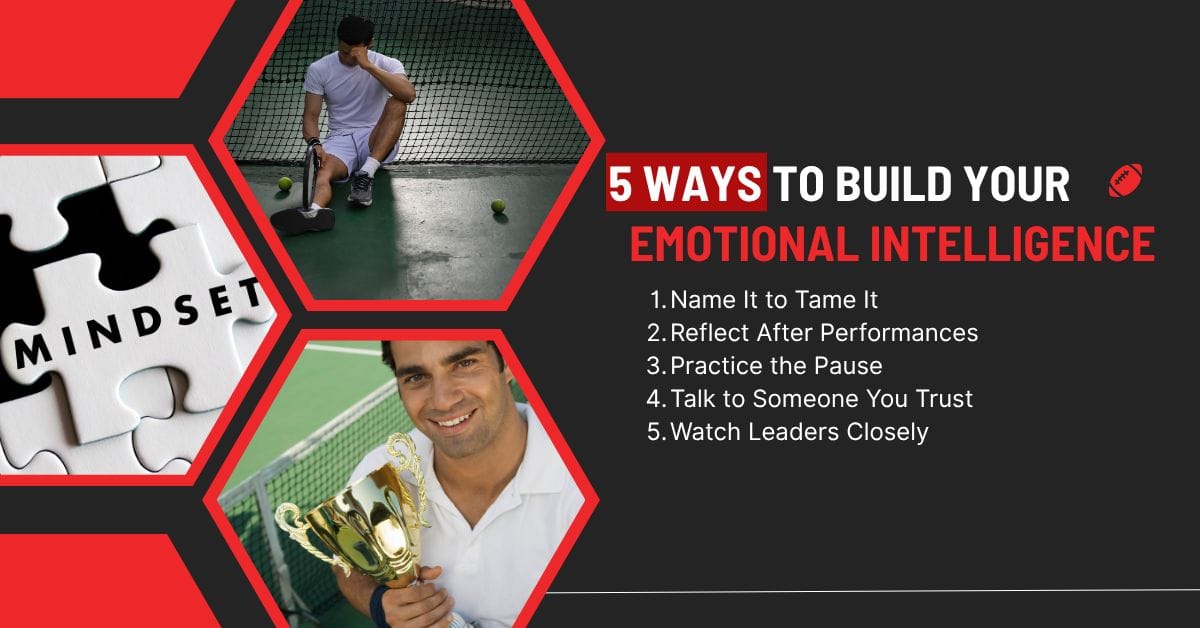
1. Name It to Tame It
Start paying attention to what you feel and when. Frustrated? Nervous? Fired up? Recognizing your emotions is the first step to managing them.
2. Reflect After Performances
Ask yourself:
- How did my emotions affect my game today?
- What did I do well mentally?
- What can I adjust next time?
3. Practice the Pause
Before reacting—take a breath, repeat a reset phrase, use a physical cue. Great athletes slow the game down, especially when emotions spike.
4. Talk to Someone You Trust
A coach, teammate, or mental performance coach. Talking through your mental game is just as important as watching video or lifting weights.
5. Watch Leaders Closely
Notice how the calmest, most composed athletes carry themselves—on and off the field. EQ often shows up in the small moments.
Reminder:
Emotional intelligence doesn’t make you “soft.”
It makes you stronger, smarter, and more resilient.
It’s not about avoiding emotions. It’s about using them to your advantage.
Train your EQ like you train your body—and you’ll separate yourself from the crowd.

Lauren Williams
High-Performance Leadership & Athletic Mindset Coach
Lauren Williams is the current Assistant Coach for PWHL New York and a former NCAA Division 1 and professional ice hockey player. Lauren holds a Masters of Education in Counseling, focused in Clinical Mental Health and is an ELITE certified coach. As Elite’s lead Brain Training for Athletes coach, Lauren has worked with numerous athletes at the youth and elite levels, helping them develop the mental skills necessary for peak performance.