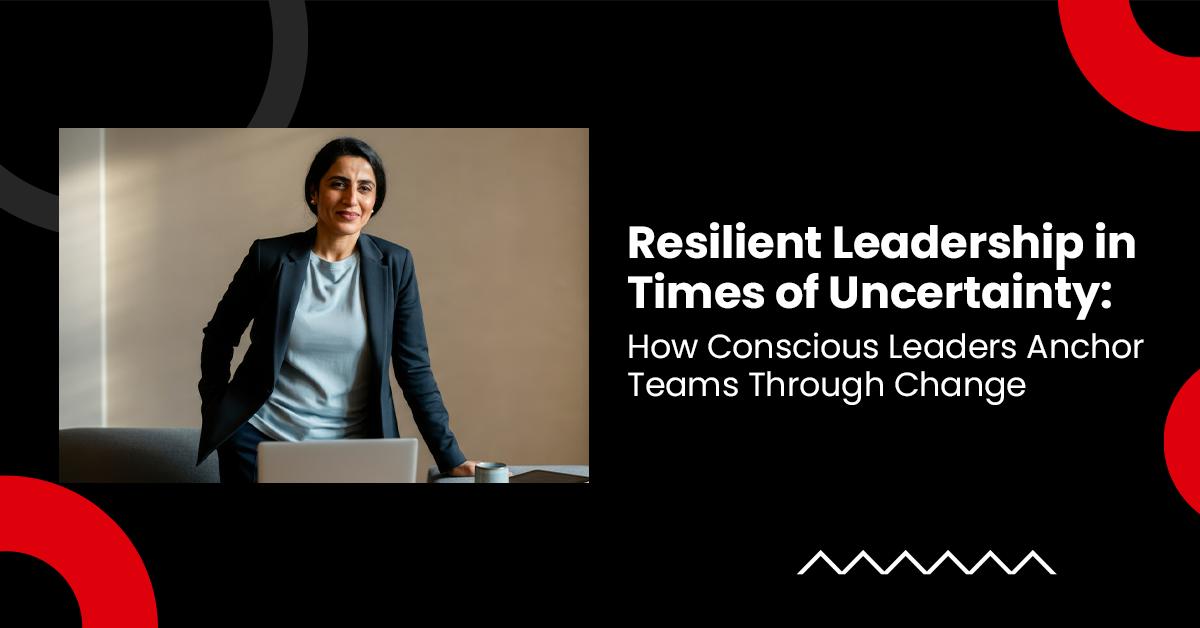
When the world feels uncertain, the best leaders don’t just survive — they steady the ship. They embody resilient leadership, grounded in awareness, adaptability, and emotional intelligence.
This week, we’re exploring how conscious leaders rise above disruption, anchor their teams through change, and model what it truly means to lead with authenticity, adaptability, curiosity, and courage.
What Is Resilient Leadership?
Resilient leadership is about staying grounded in the chaos and upheaval of change. It’s the ability to recover quickly from setbacks, adapt to evolving circumstances, and lead others with clarity and compassion.
Unlike reactive leadership, resilience requires self-awareness, emotional regulation, and the capacity to transform uncertainty into the opportunity for growth.
Conscious leaders practice presence — and that presence becomes their team’s anchor when everything else feels unstable.
The Importance of Resilience in Leadership
When pressure mounts, teams look to their leaders for signals. In moments of leadership during uncertainty, your tone, energy, and mindset ripple through your entire organization.
Leaders who demonstrate resilience help their people feel safe, focused, fully engaged and purposeful — even in the unknown. Resilience doesn’t eliminate fear; it reframes it. It pivots from “What if this fails?” into “What can we learn?”
That powerful shift in mindset transforms navigating organizational change from a stress response into a growth opportunity.
Practices for More Resilient Leadership
1. Master Your Attention Through Mindfulness
When stress hijacks your focus, mindfulness brings you back to your center (the helm in your awareness. It’s about training your mind to stay in the present moment — the only place purposeful leadership happens. Conscious leaders who practice mindfulness respond to change intentionally rather than react impulsively, a hallmark of emotional intelligence in leadership.
2. Practice Detached Self-Awareness
Resilient leaders see emotions clearly without being consumed by them. By naming feelings instead of suppressing them (“I’m feeling pressure right now”), leaders gain choice and perspective. This self-awareness is crucial for managing employee anxiety through self-aware leadership, especially when leading teams through turbulent times of change.
3. Embrace an Agile, Experimental Mindset
Rigidity breaks under pressure; agility bends and bounces back. Resilient leaders test, iterate, and adapt. They view change as feedback, not failure. This agile mindset keeps organizations innovative, even when conditions shift daily.
4. Intentionally Cultivate Positive Emotions
Optimism is a performance enhancing mindset — not a personality trait. Leaders who intentionally foster gratitude, humor, and appreciation build resilience into their culture. When people feel valued, they show up stronger. When leaders express hope, teams mirror it.
5. Build Your Personal Support System
Even the most composed leaders need support. Coaches, mentors, and peers help you process challenges and protect your energy. Investing in leadership coaching ensures you can lead from fullness, not fatigue.
Why Self-Leadership Is Key to Resilient Leadership
You can’t lead others through uncertainty if you haven’t learned to lead yourself through it first.
Self-leadership means managing your thoughts, emotions, and energy with conscious awareness. It’s about aligning your internal state with the outcomes you want to create externally.
When conscious leaders manage change and uncertainty from the inside out, their teams follow with trust and confidence. That’s why self-leadership is key to resilient leadership — it’s the foundation every conscious leader builds upon.
How Organizations Can Build More Resilient Leaders
1. Invest in Training & Coaching
Organizations that thrive in disruption invest in building resilience in their people. Workshops in emotional intelligence, mindfulness, and conscious leadership coaching help leaders stay grounded under pressure. Through these upstream investments, companies foster cultures of adaptability, engagement, and trust — key traits for leading through change.
Challenges of Resilient Leadership
Resilient leadership isn’t easy. Balancing authenticity with authority, empathy with execution, and confidence with humility takes continuous practice.
Leaders often face leadership in crisis fatigue — the pressure to appear strong while feeling uncertain themselves. But here’s the truth: resilience isn’t about never falling; it’s about how quickly you bounce back back when making a mistake.
The most authentic leaders don’t mask uncertainty — they model how to move through it consciously.
Final Takeaway
Resilient leadership isn’t built in comfort — it’s forged in challenge. The conscious leaders who master self-awareness, agility, and authenticity aren’t just managing change; they’re shaping the future of leadership itself.
Because when leaders evolve, their organizations transform.
Your highest potential IS my passion, let’s unleash it together!
-Coach Susan

Susan Hobson
CEO & Founder of Elite High Performance Inc | High Performance Leadership Coach
Susan Hobson is a High-Performance Leadership Coach, published author, keynote speaker, and Founder & CEO of Elite High Performance Inc. She co-hosts The Leadership Launchpad Project podcast, ranked the #3 leadership podcast in Canada by Feedspot for two consecutive years. A member of the Forbes Coaches Council, Susan blends neuroscience with her first-hand experience competing at Princeton, Harvard, and in the NWHL to help leaders unlock sustainable peak performance.